

About Us

Personalized Ketamine Infusion Therapy

As a Family and Psychiatric-Mental Health Nurse Practitioner, I am deeply passionate about the unique opportunity to make a meaningful impact on individuals’ lives. This role allows me to blend my medical expertise with compassionate care, providing a holistic approach to mental health treatment. I am driven by the belief that mental health is a vital component of overall well-being, and I find great fulfillment in helping my patients navigate their mental health challenges. By building strong, trusting relationships, I can better understand each individual’s unique experiences and needs, enabling me to tailor treatments that empower them to achieve their mental health goals.

What I love most about my profession is the privilege of witnessing personal growth and transformation. Each day, I am inspired by the resilience and courage of my patients as they work towards recovery and self-discovery. This journey is often complex and requires a compassionate, patient-centered approach, which I am committed to providing. I am dedicated to creating a safe and supportive environment where individuals feel heard, understood, and respected. This commitment to fostering hope and healing is what fuels my passion for psychiatric-mental health care, and it is my honor to be a part of each patient’s journey to improved mental health and well-being.

Our Facility

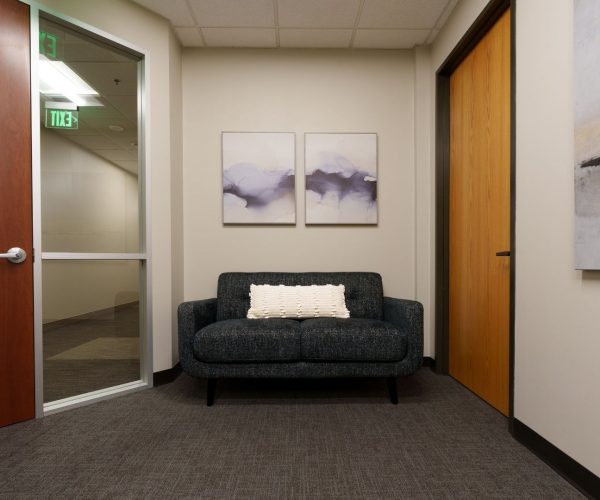
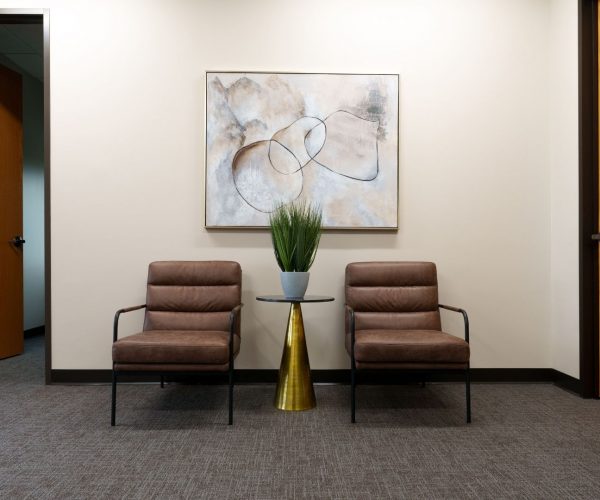
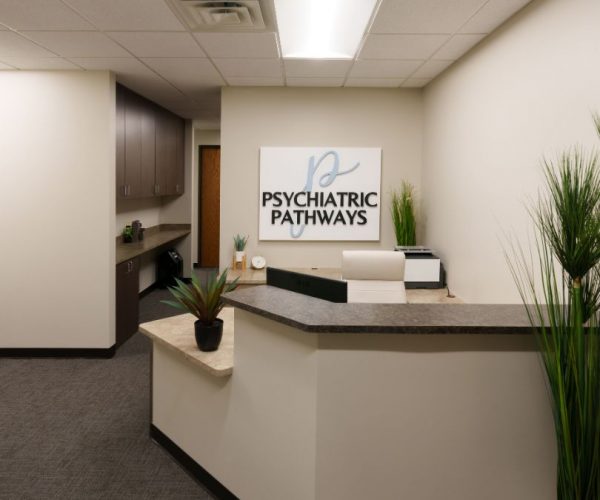
Take a look inside our calming treatment space, thoughtfully designed to help you feel comfortable, supported, and at ease throughout your care.

Testimonials

Hear from individuals who have trusted Psychiatric Pathways for compassionate care and innovative treatment on their journey toward improved mental health and well-being.

FREQUENTLY ASKED QUESTIONS

Ketamine for Psychiatric Conditions

What is ketamine?

Ketamine, an anesthetic first approved by the FDA in 1962, has long served as a general anesthesia induction agent for surgeries involving children, adults, and even animals. Its strong safety profile has made it especially popular in pediatric settings. In recent years, research has shown ketamine to be highly effective in treating depression and various other mental health conditions. Importantly, doses of ketamine are much lower when used to treat mental illness than when it is used for anesthesia.

Within psychiatry, ketamine is primarily used for treatment-resistant depression (TRD), but research also supports its use for suicidal ideations, post-traumatic stress disorder (PTSD), and, in some cases, anxiety disorders, OCD, bipolar disorder, postpartum depression and dysthymia (2, 3, 4). While there is no set definition for treatment-resistant depression, many providers agree this is considered when a patient has not found acceptable relief from two different antidepressants after taking for the recommended trial lengths (typically 6-8 weeks). If you have not yet tried two different antidepressants, Psychiatric Pathways is happy to facilitate a referral to a psychiatric medication provider. It is recommended that patients continue working with their existing providers for ongoing medication management and psychotherapy while receiving ketamine treatments.

No, ketamine is not a cure. It can provide rapid symptom relief, especially for those who have not responded to other treatments, but ongoing therapy and follow-up are essential (1, 4).

According to research studies, infusions of ketamine to treat depression can be effective for up to 79% of individuals (6). The effects of ketamine may last for a few days to several weeks, though some people can remain symptom-free for months and beyond. Importantly, individual results may vary widely.

Ketamine acts on the brain’s glutamate system, specifically as an NMDA receptor antagonist, which is thought to rapidly improve mood and reduce symptoms of depression and suicidality (2). The exact mechanism of action that allows ketamine to relieve depression is complex and still under investigation. What we know is that it works on a neurotransmitter called glutamate which leads to the production of an important growth factor that helps the brain repair damaged neurons affected by stress and mental illness. Thus, ketamine, can improve mood within hours/days and also cause the regeneration of nerve cells over time.

Unlike traditional antidepressants, ketamine can provide rapid relief of depressive symptoms, often within hours to one day after administration (2, 4). A typical initial course of treatment for ketamine infusions is twice a week for 3 weeks. Many patients achieve significant symptom relief after the first initial series of infusions.

The antidepressant effects of a single ketamine infusion typically last from several days to 2 weeks. Repeated treatments may be needed to maintain benefits (4), however the goal is to achieve symptom relief such that booster/maintenance infusions can be given a few times a year as needed.

Ketamine is administered intravenously, very slowly over 40-60 minutes. At the start of the infusion, you may not have noticeable effects, but as the infusion progresses, you may encounter feelings of “lightness” or “floating.” Some individuals describe a sensation like “a weight being lifted off their shoulders.” Most patients describe mild dissociative symptoms that are generally well-tolerated. You will be monitored throughout the infusion and we are prepared to treat any unpleasant side effects during the procedure. Within 15 minutes of completing the infusion, you will to start to regain your senses and your thinking will return to normal.

No. The dose of ketamine you will receive does not cause any loss of consciousness.

It is recommended to avoid eating for 4 hours and avoid drinking liquids for 2 hours before your appointment time.

Yes, you can typically continue all of your current medications with the exception of benzodiazepines and narcotics. It is recommended that these be held on your infusion days.

Common side effects include elevated blood pressure, nausea, dizziness, lightheadedness, dissociation (feeling disconnected from reality), perceptual disturbances (time appearing to speed up or slow down; colors, textures, and noises that seem especially stimulating; blurry vision) and, rarely, hallucinations. These effects are usually short-lived and monitored in a clinical setting (4).

Ketamine has abuse potential, especially outside of medical supervision. When administered in a controlled, clinical environment for psychiatric indications, the risk of addiction is considered low (2, 4).

KAP combines ketamine administration with psychotherapy sessions. The goal is to use ketamine’s rapid symptom relief to enhance engagement in therapy and facilitate psychological insight (1). At this time, Psychiatric Pathways does not offer KAP, but rather focuses on the use of ketamine for its wide potential for providing symptom relief from various mental health challenges.

Ketamine may not be appropriate for individuals with uncontrolled hypertension, certain heart conditions, active substance use disorders, uncontrolled seizure disorders, or a history of psychosis. A thorough medical and psychiatric evaluation is required before starting treatment, and is included in the price of the first infusion. Importantly, care is managed on a case-by-case basis as every mind and body is unique. Some cases may require consultation or clearance from other medical providers who participate in your healthcare.

Ketamine is currently considered an off-label treatment when used for mental health conditions. Off-label use of ketamine (e.g., IV infusions) is often not covered by insurance and therefore requires out-of-pocket payment at Psychiatric Pathways (4).

A nurse practitioner is a registered nurse with advanced academic and clinical experience, which enables him or her to perform physical and psychological assessments, make diagnoses, conduct therapy, and prescribe medications for individuals with medical and/or psychiatric disorders. Our provider, Brenna Christie, is dual board-certified as a Family and Psychiatric-Mental Health Nurse Practitioner, and has experience as a Registered Nurse since 2013.

A nurse practitioner is not a psychiatrist or medical doctor. A psychiatrist is a trained physician who has completed medical school and residency in psychiatry. If you prefer to work with a psychiatrist, or if a referral to a psychiatrist is appropriate for a complex problem, we will provide you with referral information and directly assist you with the referral process.

These FAQs are based on current evidence and clinical guidelines. For more detailed information, refer to recent reviews and consensus statements on ketamine’s psychiatric use.

References

  • Drozdz, S. J., Goel, A., McGarr, M. W., Katz, J., Ritvo, P., Mattina, G. F., … & Ladha, K. S. (2022). Ketamine assisted psychotherapy: A systematic narrative review of the literature. Journal of Pain Research, 1691-1706.
  • Derakhshanian, S., Zhou, M., Rath, A., Barlow, R., Bertrand, S., DeGraw, C., … & Kaye, A. D. (2021). Role of ketamine in the treatment of psychiatric disorders. Health Psychology Research, 9(1), 25091.
  • Ramos, C. S., Thornburg, M., Long, K., Sharma, K., Roth, J., Lacatusu, D., … & Manzoor, M. N. (2022). The therapeutic effects of ketamine in mental health disorders: A narrative review. Cureus, 14(3).
  • Yavi, M., Lee, H., Henter, I. D., Park, L. T., & Zarate Jr, C. A. (2022). Ketamine treatment for depression: A review. Discover Mental Health, 2(1), 9.
  • Jelen, L. A., McShane, R., & Young, A. H. (2024). Guidelines for ketamine use in clinical psychiatry practice. BJPsych Open, 10(3), e107.
  • Li, W., Zhou, Y., Liu, W., Wang, C., Lan, X., Zhang, Z., … & Ning, Y. (2022). Long-term outcomes of repeated ketamine infusions in patients with unipolar and bipolar depression: A naturalistic follow-up study. Journal of Affective Disorders, 300, 172-178.